
Private AI for Law Firms: Keep Client Matters Separate
Separate reusable practice knowledge from client-matter records, test access boundaries with fictional files and review drafts before sharing legal work.
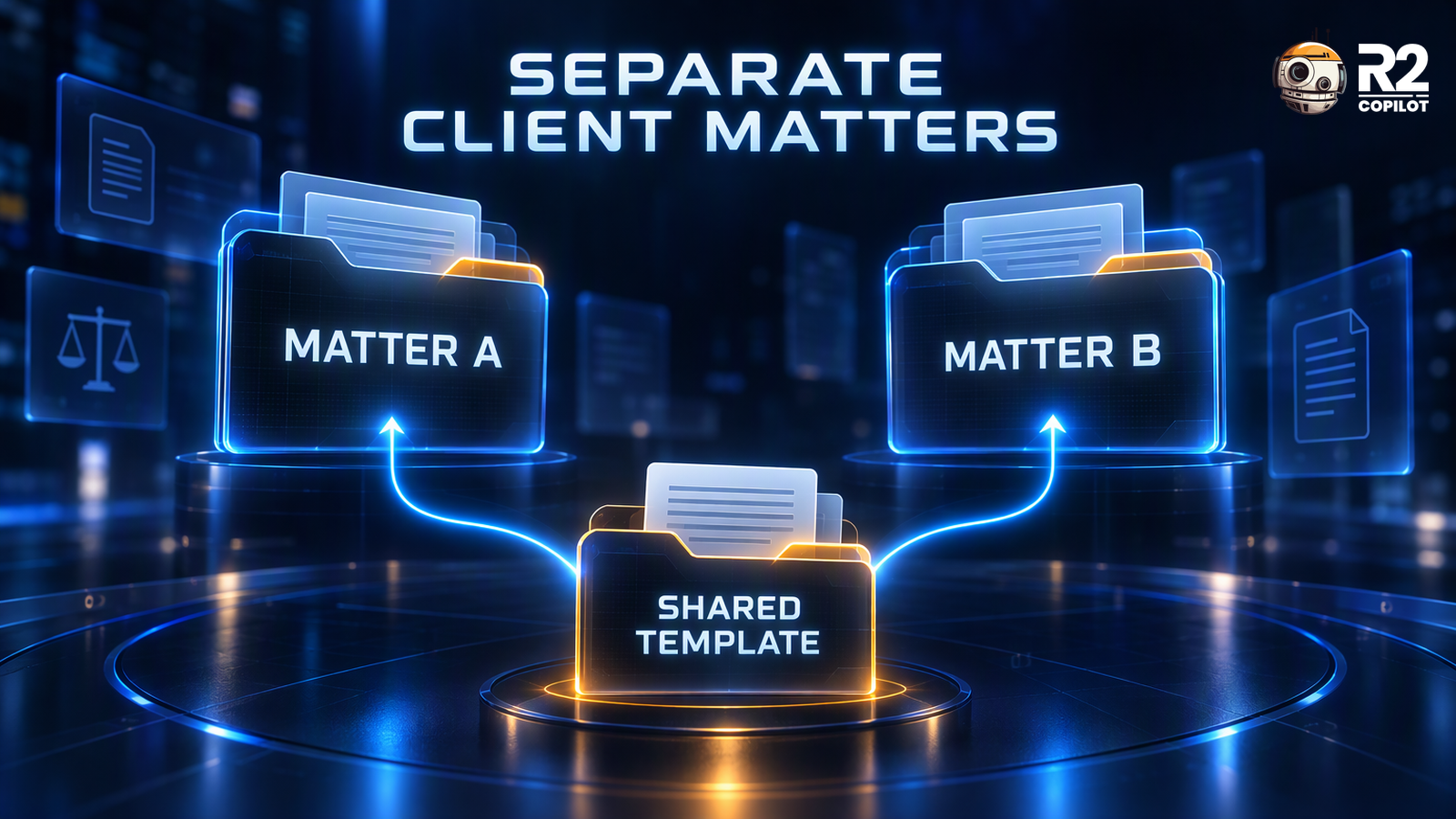
Keep client material tied to its matter, separate it from approved practice knowledge and see which sources an AI task can reach. Test the boundary with fictional files, then review the draft and its recipient before releasing any client-facing work.
Find Where One Matter Could Enter Another
A law firm may want to reuse a good drafting approach without reusing the client's facts. The boundary becomes unclear when a previous letter, case summary or conversation is treated as a general example. A useful sentence can still carry a settlement position, witness detail or other information belonging to a different matter.
The SRA's guidance on client confidentiality says one client's confidential information should not be passed to another and addresses duties extending to support staff. For SRA-regulated practice in England and Wales, this makes client separation an operational concern across the firm, rather than a task left only to the lawyer writing the final document.
When evaluating confidential AI for legal documents, trace the material available to the task. Check selected uploads, connected document collections, earlier conversation content and retained drafts. A matter name in the prompt is not evidence that every accessible source belongs to that matter.
Separate Practice Knowledge from Client Records
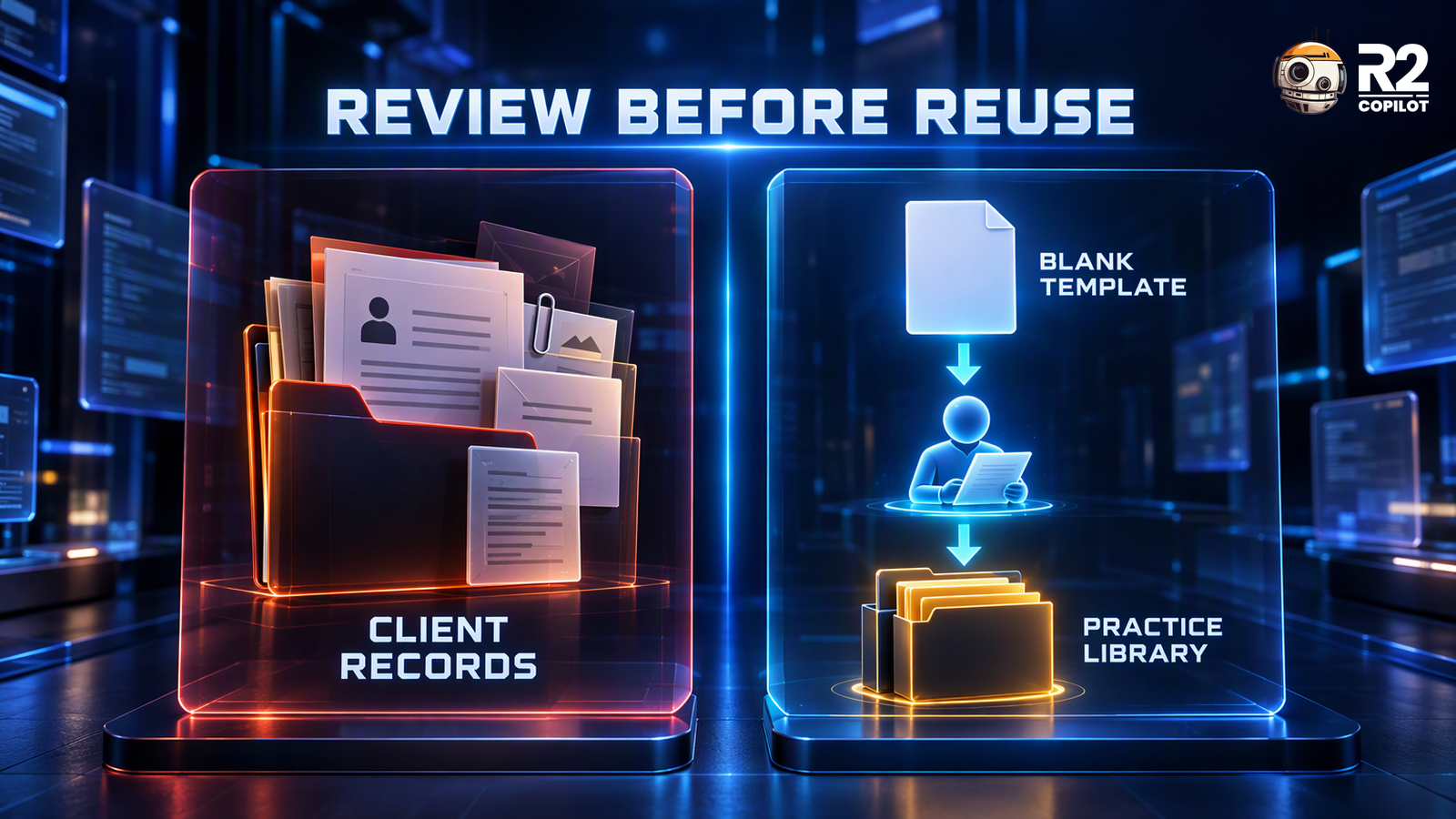
Reusable practice knowledge might include an approved blank letter structure or public procedural guidance. Matter-restricted records include the client's instructions, evidence, correspondence and work product. A document does not become reusable simply because someone removes its heading or saves it in a templates folder.
Have a responsible reviewer approve material for the shared library. Check the text, comments, attachments and document history for client-specific information before reuse. Keep the approved version and its owner identifiable. Material that cannot be cleared for sharing stays within its permitted matter scope.
For AI case file summarization, define the permitted source set before requesting the summary. Ask the implementation team to demonstrate how access and document selection constrain that set before material reaches the model. If the available tool cannot support the required boundary, use a narrower approved workflow or exclude client records from that tool.
The American Bar Association's Formal Opinion 512, interpreting the US Model Rules, discusses cross-matter disclosure risks with self-learning generative AI tools, including within one firm. Its analysis depends on the client, matter, task and tool. That discussion does not mean every AI request trains a model; assess the actual terms and behavior, and have the responsible lawyer determine applicable disclosure and consent duties.
Test the Boundary with Two Fictional Matters
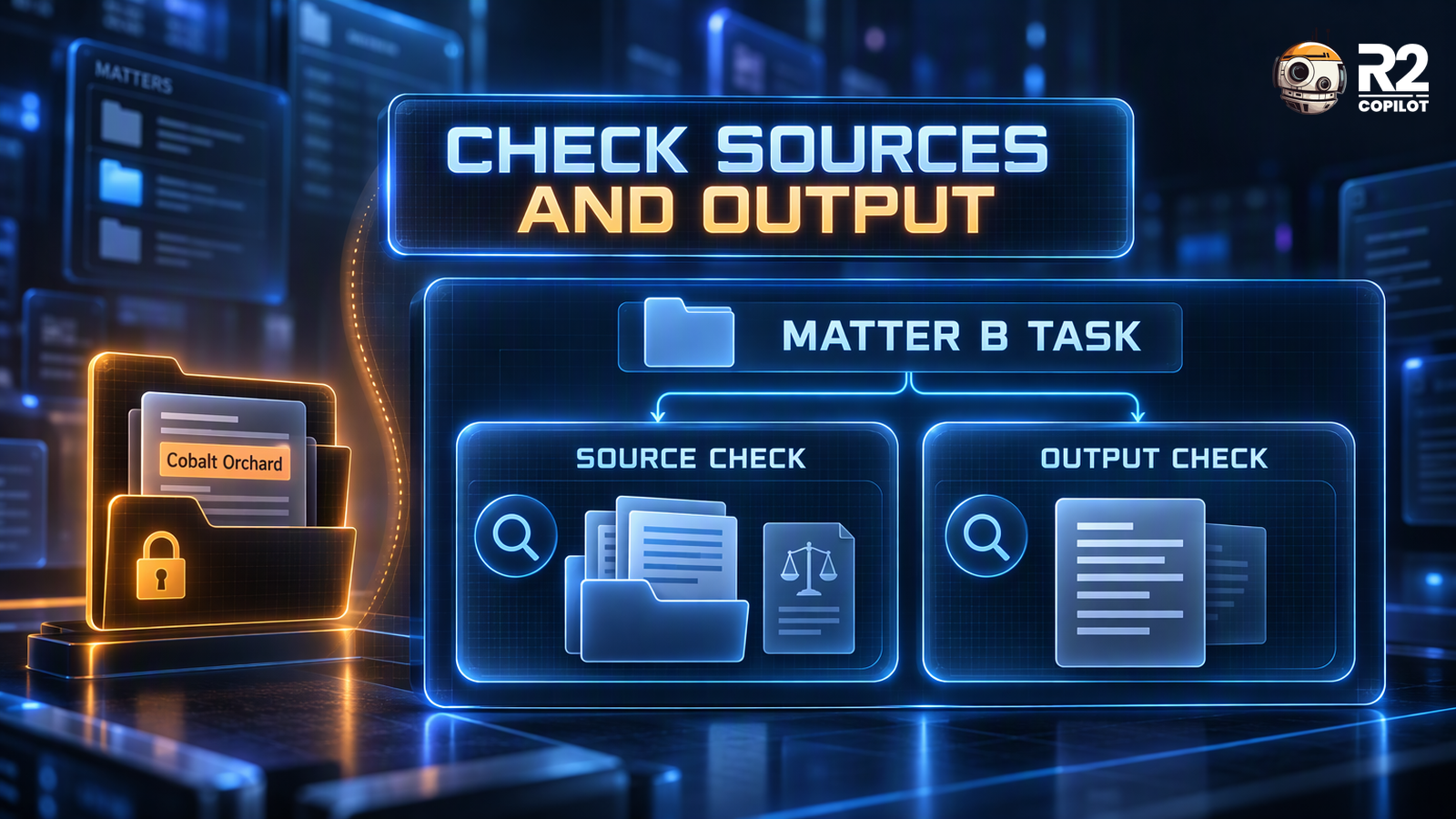
Use a controlled test environment and entirely invented records. The following is a proposed evaluation exercise, not an observed product result or a prescribed regulatory test. Create Matter A with a distinctive invented phrase, such as Cobalt Orchard, and Matter B with different invented facts. Give both access to one blank shared template.
For AI legal memo drafting, assign the task to Matter B and define its permitted sources as Matter B plus the approved template. The phrase in Matter A is a test marker, not a real secret. Never use genuine client information to find out whether a boundary works.
| Test condition | What to inspect | Finding that needs attention |
|---|---|---|
| User permitted to access only Matter B | Source selection and any available access or retrieval record | Matter A becomes available to the task |
| User permitted to access both matters, task scoped to B | Task source set, references and draft | Broader user access silently expands the task to A |
| Fresh task after work on Matter A | Conversation selection and other context supplied to the new task | Earlier matter content carries into B |
| Draft retained or exported for Matter B | Destination, permissions and included attachments | Output becomes accessible beyond its intended recipients |
Check the actual source set as well as the response wherever the environment makes that evidence available. A draft that omits the marker does not prove Matter A was inaccessible: the model might receive information without repeating it. If source or access evidence cannot be inspected, record that limitation and withhold a claim that the test verified isolation.
If an unexpected source or marker appears, stop that tested workflow and investigate the relevant access, selection or conversation path. Retest after correction. Repeat in the opposite direction and with the roles used in practice; one successful task covers only its stated conditions.
Keep the Recipient and Reviewer in the Workflow
AI legal correspondence drafting adds a final destination question. A draft assembled from the correct sources can still go to the wrong client or include an attachment from another matter. Confirm the matter, recipient, attachments and authority to send before release. Have the supervising lawyer check factual and legal content, including any references the tool supplied.
The SRA's August 2026 warning on AI misuse calls for appropriate contractual, technical and organizational safeguards before client information enters AI systems and retains professional accountability for the resulting work. Its warning addresses SRA-regulated firms and individuals; together with the ABA opinion, it informs this discussion without establishing a global rule of law or a guarantee of privilege.
If R2 Copilot is being evaluated for this workflow, ask whether the proposed arrangement can meet the firm's matter-scoping and evidence requirements. Require a demonstration under the intended conditions rather than infer those controls from the name or a private label.
Choose one intended workflow and give its matter owner and implementation lead the two fictional test files. Agree on permitted sources, evidence to inspect and release responsibility before allowing actual client records into that workflow.